You are here:Home1/Guides Reports2/Migration Guide From Universal Media Gateways To Tmedia Gateways
Migration Guide From Universal Media Gateways To Tmedia Gateways
Alianza (formerly known as Metaswitch) and TelcoBridges are committed to helping service providers migrate from UMGs to Tmedia gateways if they so choose.
Migrating from UMGs to Tmedia is a simple process that is done on a unit-by-unit basis.
Total cost to the service provider is 4-6 hours of technician-hours per unit (assuming the equipment has been acquired and delivered).
TelcoBridges has helped dozens of service providers complete their migrations from MetaSphere CFS networks or AMGC controlled UMG units to Tmedia units.
The Metaswitch UMG is a reliable, robust, field-hardened product that has been in market for 20 years and deployed at hundreds of service providers. That said, it is now end-of-sale, with early generations also out of support, and support for the latest ATCA generation ending in a few years, per Metaswitch’s current end of sale policies. Hence, some service providers, especially those running gateways now out of support, may prefer to migrate to a product and a vendor with a longer-term commitment to media gateways.
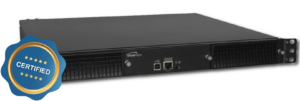
In 2022 Metaswitch (now part of Alianza) partnered with TelcoBridges as the only certified media gateway replacement to UMGs. TelcoBridges has a no end-of-life policy on its Tmedia product line. Alianza and TelcoBridges are committed to helping service providers migrate from UMGs to Tmedia gateways if they so choose. Below is a guide on what to consider for your media gateway migrations and includes links to more information.
Migration scenarios
The simplest scenario is unit-by-unit replacement of Metaswitch UMGs with TelcoBridges Tmedia gateways without any network topology change. This can be repeated as many times as needed to achieve replacement of multiple UMGs in a network. This document explains this scenario in detail, assuming each UMG is controlled by a MetaSphere CFS, AGC, MGC or combined AGC/MGC.
Many networks contain Integrated Systems combining the CFS and UMG in a single unit. These Integrated Systems can also be migrated, by first doing a separate migration to split the IS into a CFS and UMG. This split is a standard Alianza migration service and not described here.
Additionally, some service providers may be looking to make more significant changes, for example consolidating gateways or changing the topology in other ways. This requires a specific project tailored to the needs of the network, but at its core is still the process described below of migrating trunks and traffic from UMGs to Tmedia gateways.
Migrating one UMG for one Tmedia – assuming no desired changes to network characteristics
Migrating from a UMG to a Tmedia is done on a unit-by-unit basis. The total amount of time required for the migrations is simply the estimated time required per unit multiplied by the total amount of units.
The process of migrating from a UMG to a Tmedia is straightforward and requires the following major steps once the equipment is in the possession of the service provider:
Service provider rack-mounts and installs power on the Tmedia device, and allocates Management IP for remote connection.
This step can be done without interrupting service.
Estimated time required: 2-3 hours of service provider technician-hours
Service provider uses MetaView Explorer to add the new Tmedia device object into the CFS configuration as a Trunk/Access Gateway.
TelcoBridges will need 3-5 hours to copy the configurations on the active UMG into the Tmedia device, based on an agreed mapping of trunk configuration from ports on the UMG to ports on the Tmedia.
In this time TelcoBridges assesses, copies and tests as part of the same task.
The exact length of time depends on the number of protocols interacting with the unit.
This step is managed by TelcoBridges in collaboration with the service provider.
Estimated time required: 3-5 hours of TelcoBridges engineers.
Service provider moves the TDM trunks from the UMG to the Tmedia and updates the CFS configuration in parallel.
NOTE: This step requires a maintenance window, and there will be a brief outage on each trunk.
Typically this will be done in multiple batches, though small systems can be done as a single batch “flash cut” if preferred.
For each batch
a technician moves the appropriate cables from the UMG to the Tmedia
an operator updates the CFS configuration for the respective trunks to refer to the Tmedia instead of the UMG, typically by running a script.
Tests are performed to verify all call scenarios are working.
Estimated time required: 2-3 hours of service provider technician-hours and TelcoBridges engineers.
Service Provider uses MetaView Explorer to disable and remove the old UMG’s Trunk/Access Gateway object from the CFS configuration.
Service Provider decommissions and removes the old UMG.
Migrating multiple units at multiple locations
Migrating from UMGs to Tmedia devices can be done as quickly or as slowly as is required. The process described above simply needs to be replicated for every unit. The process is significantly accelerated if multiple units are migrated simultaneously (either at the same or different location depending on technician availability).
In continuing with the example above, migrating 25 units would require 100-150 hours of technician-hours.
TelcoBridges migration credentials (all with CFS or AMGC softswitches)
TelcoBridges has helped dozens of service providers complete their migrations from MetaSphere CFS or AMGC controlled UMG units to Tmedia units.
Many of these providers had >10 locations and >50 total units.
The process described above applies to both H.248 and SIP controlled units.