Trust your data, accelerate your AI with Voice Intelligence
Scalable voice data for better AI outcomes.
trace every call · watch every node · connected to AI
Meet Butler, your new NOC assistant
If you are not saving 10 hours every month after sending 100 messages to Butler, we will give you 100% of your money back.
Butler lives in Teams or Slack, is awake 24/7, and sees everything in your voice network.
- Troubleshoot why calls failed
- Manage routing tables
- Perform network maintenance
- Send reports and attachments via email
From one SIP message to the entire network
Voice Intelligence correlates every SIP message to every CDR entry and makes the data usable by AI. Trace is the deepest possible view of a single call leg. Nodes is the bird’s eye view of your entire network.
Voice Intelligence Trace
Drill into any call, down to every SIP message. The only troubleshooting tool that correlates every call leg in your network with 100% accuracy.
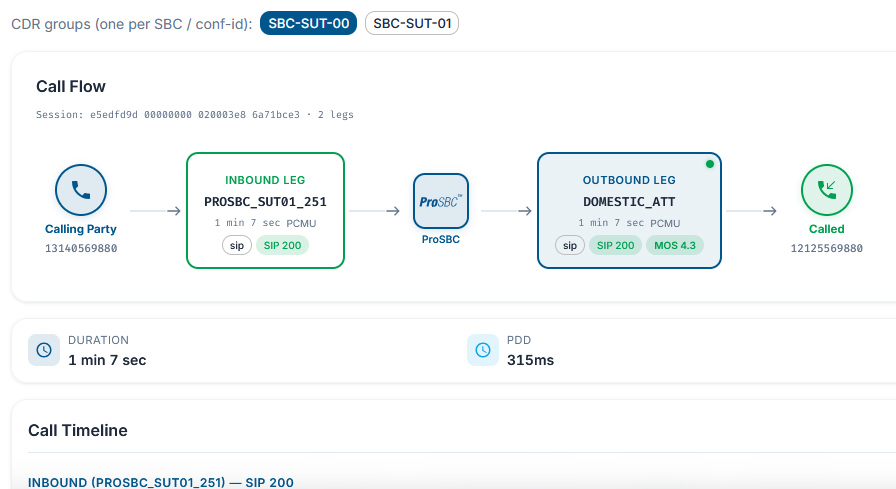
- Correlate every leg of a call across your whole fleet
- Read the full SIP ladder, message by message
- Turn any trace into a shareable customer report
Voice Intelligence Nodes
Manage your entire fleet, see aggregate trends against historical averages, and watch CPU, RAM, and memory on every node.
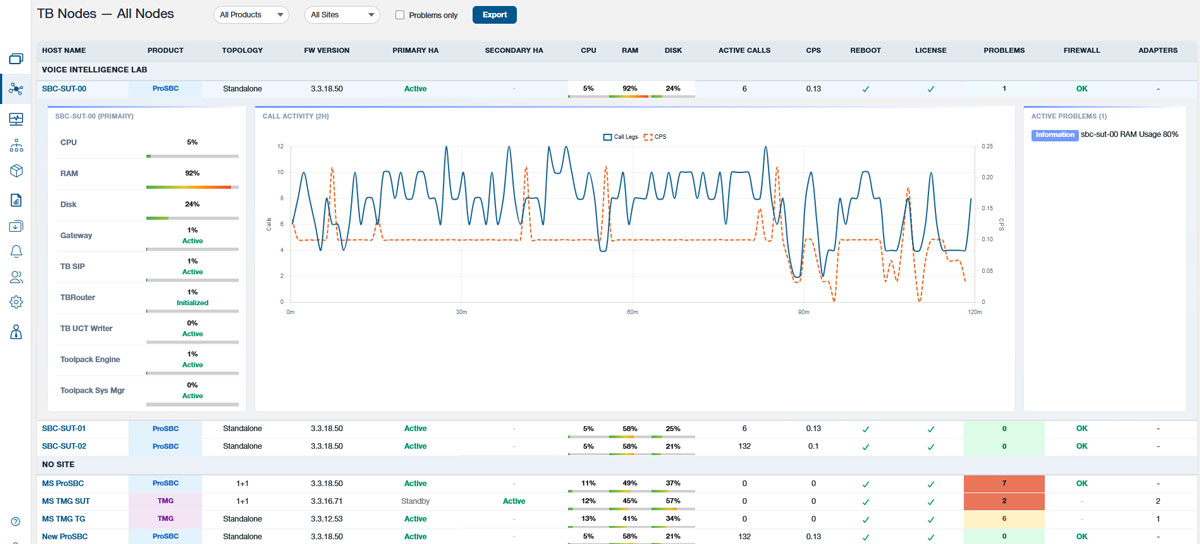
- Per-node health, capacity, and HA state at a glance
- Aggregate call trends vs historical baselines
- Manage and monitor every device, anywhere
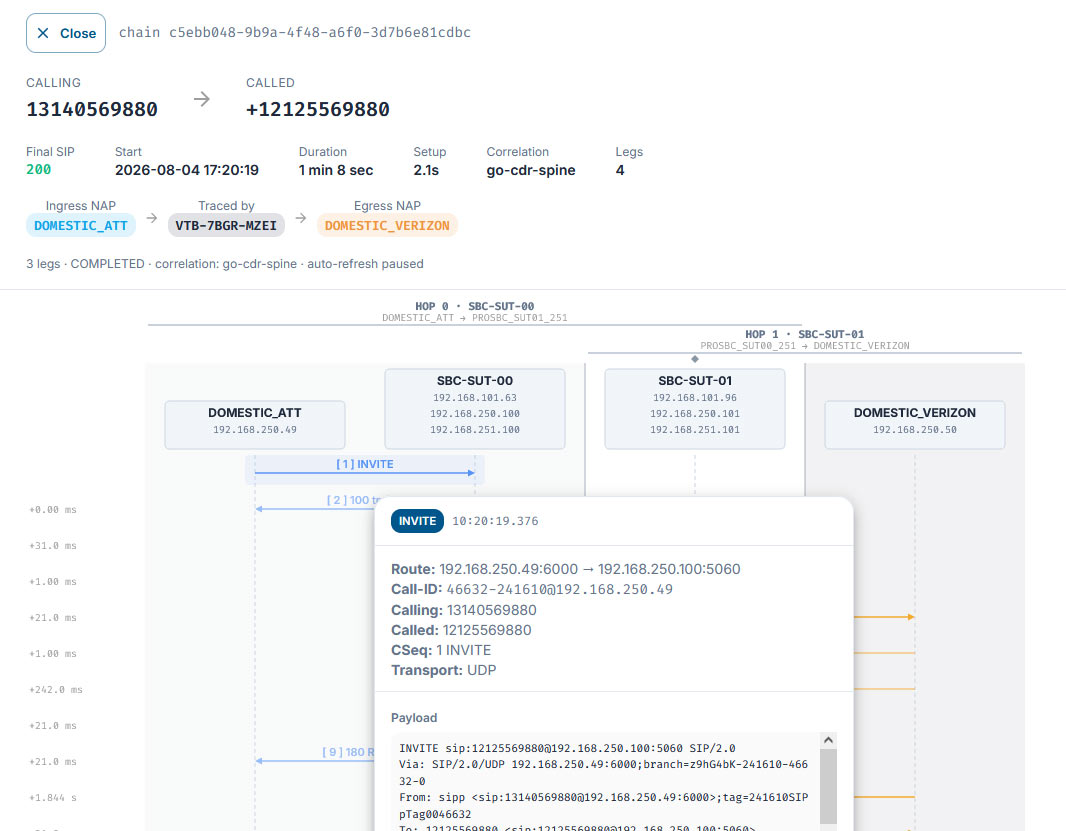
See exactly what happened on every call
When a customer reports a failed call, the answer is usually buried across two or three SBCs. Trace correlates the legs into one timeline and lets you open the SIP ladder for any of them, message by message.
The reconstruction that used to take the better part of a work day becomes a single lookup, and the answer is evidence you can hand a customer.
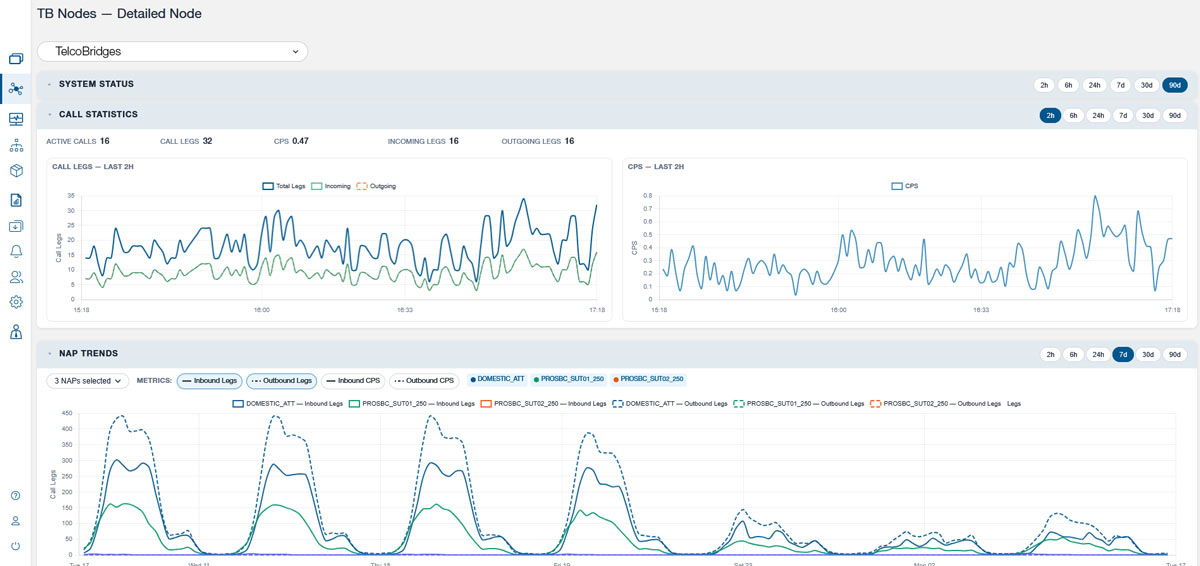
Catch problems before they reach your customers
Nodes plots aggregate call volume, answer rates, and node health against historical baselines, so a peak or a dip stands out against what is normal for the hour and the week.
It is also where you manage the fleet, with the element-management controls to act on what you see, across every node including the ones behind a firewall.
Direct customer quotes
We had no idea our post-dial delay was so high. We only found out because of this tool. We reached out to the carrier to ask why.
Now, this is my default go-to platform for any kind of troubleshooting request.
We found the call using Unified Search, clicked ‘generate report’, sent the report to the customer. They were really impressed.
Everything your voice data should already do

Cross-fleet correlation
Every leg of a call, stitched into one record across your whole network, automatically.
Trends against history
Aggregate call data measured against historical baselines and earlier weeks, so anomalies announce themselves.
Node health and capacity
CPU, RAM, memory, sessions, and CPS per node, with HA state and the controls to manage the fleet.
Anomaly and fraud signals
Per-NAP, per-hour baselines flag drift and fraud patterns a fixed threshold would miss.
Ready for your LLM
Correlated, normalized, tenant-isolated data that the model you choose can reason over through MCP.
Built for your stack
Reads CDRs and SIP from any device in your network, mixed fleets included.
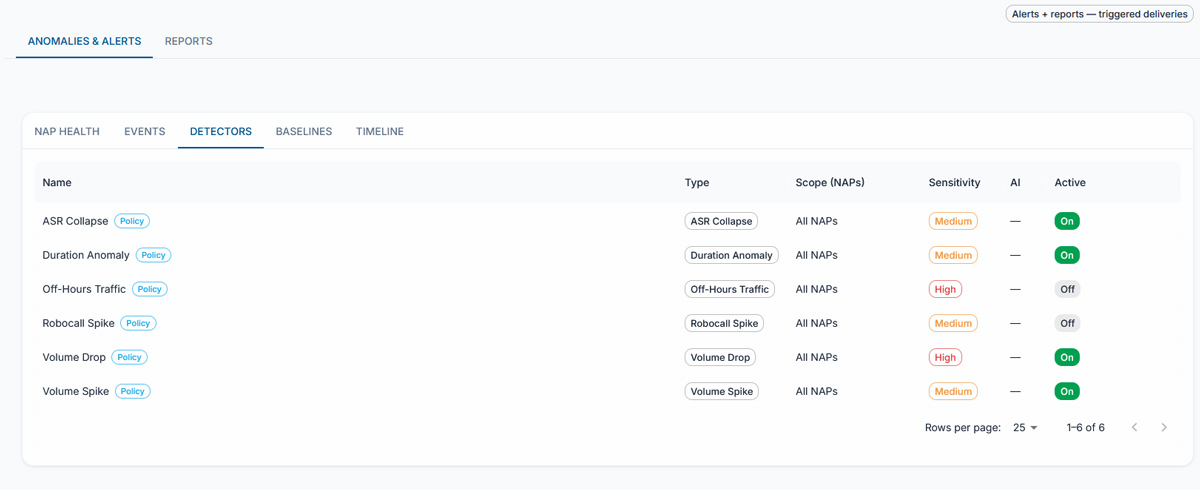
Proactive identification of suspicious activity
Voice Intelligence learns what normal looks like and flags what breaks the pattern on its own. Off-hours surges, volume spikes, duration anomalies, answer-rate collapses, and robocall bursts are caught as they form, not found weeks later.
Fraud is the pattern that matters most. Not every anomaly is fraud, but nearly all fraud shows up first as an anomaly. Trace catches the suspicious pattern across the network and lets you open the exact calls and numbers behind it to confirm it and gather the evidence.
Replacing VoIP Monitor or Homer?
Trace covers the call-level troubleshooting those tools are known for and correlates it across your whole fleet. Nodes adds the network-wide health and trend view they do not provide.
No surprises, no lock-in

Fixed monthly billing
A predictable monthly fee, not a metered bill that swings with your traffic.

Priced on concurrent calls
You pay for the capacity you run, based on maximum concurrent calls.

No long-term commitment
No multi-year contract to sign. Stay because it works, not because you are locked in.

Deployed in 48 hours
From go-ahead to live on your fleet in two days, not a quarter-long rollout.
Frequently Asked Questions
What is Voice Intelligence?
Voice Intelligence is a multi-tenant SaaS platform that ingests CDRs and SIP captures, correlates every leg of a call into one record, stores it, and serves it through dashboards, a natural-language AI assistant, and an MCP server.
What is the difference between Trace and Nodes?
Trace is the depth pillar: drill into any individual call and read every SIP message across your fleet. Nodes is the breadth pillar: per-node CPU, RAM, and memory, aggregate call trends against historical averages, and fleet management. They share the same correlated data and hand off to each other. A trend in Nodes points you at a window and a NAP; Trace takes you into the individual calls behind it.
What devices does Voice Intelligence work with?
It is purpose-built for ProSBC session border controllers and Tmedia gateways but it can read CDRs and SIP from the devices you already run in your network. CDRs arrive over RADIUS, as text-file uploads, and in proprietary binary formats, all normalized into one canonical record.
How does anomaly and fraud detection work?
Voice Intelligence learns what normal looks like for each NAP and node, at each hour of each day, and flags what falls outside it automatically. Detectors are created across the network and watch for off-hours traffic, volume spikes, duration anomalies, answer-rate collapses, and robocall patterns. Nodes catches the suspicious pattern across the network; Trace lets you open the specific calls and numbers behind it to confirm it and gather the evidence.
How is Voice Intelligence priced?
Fixed monthly billing, priced on maximum concurrent calls. A predictable monthly fee, not a metered bill that swings with your traffic. No multi-year contract to sign. From go-ahead to live on your fleet in two days.
Is my data kept separate from other customers?
Yes. Voice Intelligence is multi-tenant with tenant isolation enforced at the data layer. Every record carries its tenant. Queries and model actions are scoped to the right owner at the data layer, so grounding a model in this data does not risk it reaching across customers. That boundary is enforced by the platform, not left to the model to respect.
Get total visibility into your voice network today
Stop spending hours hunting down call failures and missing fraud patterns. See every call leg, monitor your fleet health, and prepare your data for AI, all in one place. Fill out the form below to get started or learn more.
By submitting this form, your information will be processed in accordance with our Privacy Policy.